
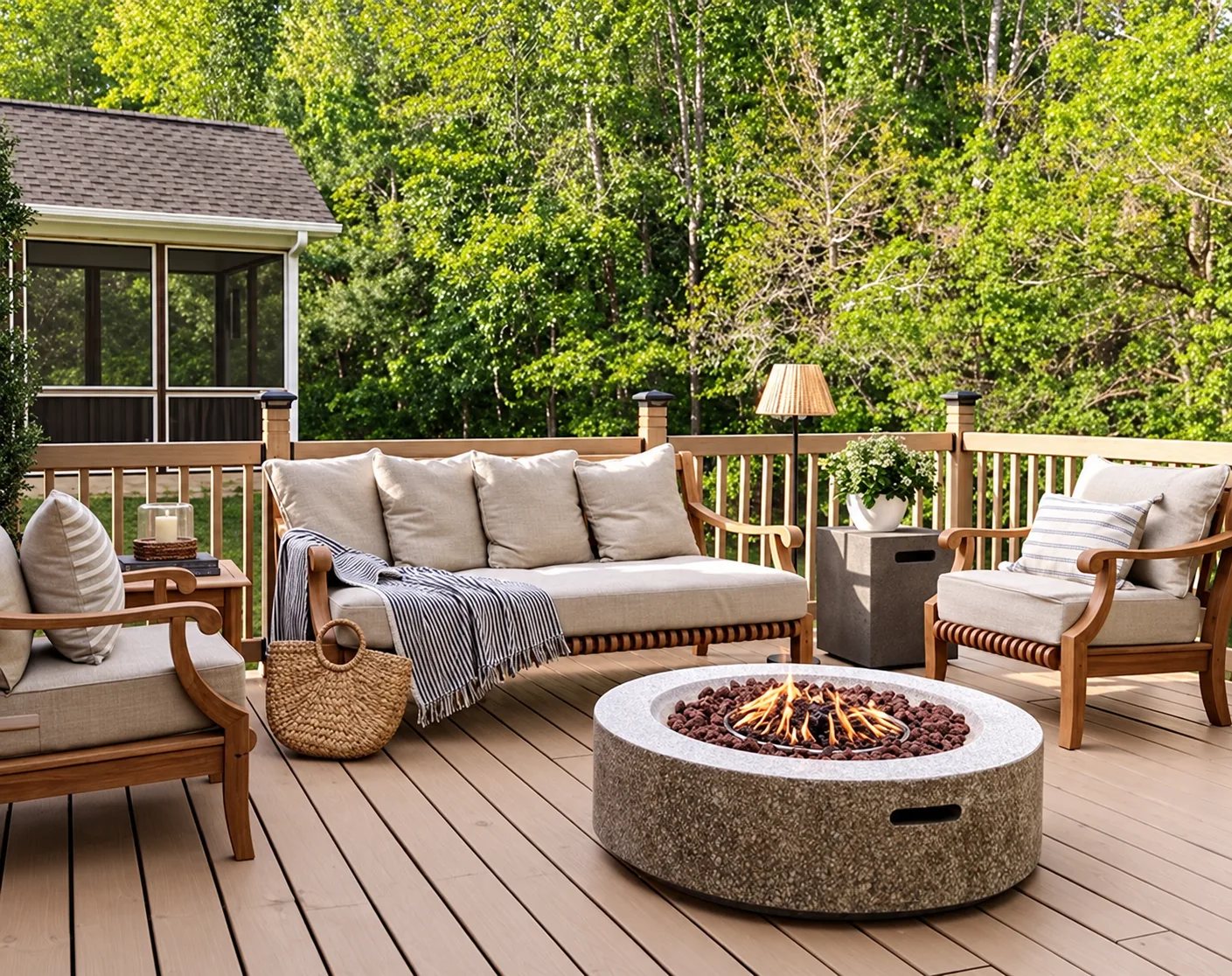
Choosing composite decking is easier when the conversation begins with your actual outdoor space, not just a small colour square online. Toronto light, changing seasons, nearby trees and the brick, stone or siding around a home can all shape how a deck is experienced. A focused discussion helps you compare options.
Bring photos and rough measurements, then use samples to connect material choices to the deck’s intended use. The questions below can help turn an initial look at composite decking options into a clearer plan for colour, layout, surrounding features and care.
Start with samples, not a screen
A screen is useful for gathering ideas, but it cannot reliably show undertones, texture or how a finish appears in changing light. Ask to see physical samples and, where possible, view them beside the exterior materials that will stay. A board that appears neutral on its own may read warmer or cooler next to red brick, dark window frames or pale siding.
Look at samples outdoors in direct sun and shade. Ask whether you can compare more than one board from a selected colour family, and note the product and shade names as you narrow the field. It is also useful to ask how the selected deck colour could relate to fascia, stair details and railing components. Keeping those decisions together prevents the deck from being considered as an isolated surface.
Choose colour in the context of the whole yard
Start with the fixed elements: the home exterior, existing hardscape, garden structures and any finish you do not plan to change. Then consider the feeling you want the deck to create. A close match may make the deck recede into the architecture, while contrast can define it as a distinct outdoor room. Neither approach is automatically right; the answer depends on the house and how the space will be used.
Ask how variation, grain pattern and edge details will look across a larger area rather than on one short piece. If the yard has mature trees or a covered area, ask to compare choices in the light those conditions create. For a colour you are considering, request project-specific guidance on how it works with its adjacent surfaces rather than relying on a general rule.
Match board profiles and layout to the design
Board profile and layout affect the visual rhythm of a deck as well as the details that need coordination. Ask which profile choices suit the proposed structure and fastening approach, and how the board edges will be handled at the perimeter, stairs and transitions. Final technical suitability should be confirmed for the particular design and materials selected.
Next, discuss the direction of the boards. A straight run, a diagonal pattern, a picture-frame border or a change in direction near a landing can produce very different results. Share where doors open, where people will walk, where furniture is likely to sit and what views you want to emphasize. This makes it easier to plan a deck layout that supports the space instead of treating layout as a last-minute detail. Browse deck project ideas with an eye on proportions, stairs and transitions, not only colour.
Coordinate railings, fences and lighting early
A deck commonly meets other outdoor elements, so the material conversation should include more than boards. A railing can affect sightlines and the visual weight of the perimeter; explore the relationship between deck colour and railing options before finalizing either one. If a fence is nearby or planned, compare its finish, height and placement with the deck from the views that matter most. The fence planning page can help frame those discussions.
Also identify where lighting may be useful around steps, seating or pathways before the surface details are settled. Reviewing outdoor lighting considerations early helps keep the deck, railings and adjacent yard working as one area. Property boundaries, local rules, drainage, existing utilities and any needed approvals should be confirmed for the individual project rather than assumed from another installation.
Ask what care looks like after the project
“Maintenance” can mean different things to different homeowners. Rather than assuming what will be required, ask for the recommended care information for the exact product and finish being considered. Clarify what routine cleaning involves, what tools or cleaners are appropriate, how to address spills or marks, and whether there are actions to avoid. Ask about care around planters, barbecue areas, furniture feet and seasonal debris if those are part of your plan.
Use this practical checklist during a material conversation:
- Can we compare the leading colour samples outdoors beside my home’s existing materials?
- Which board profile and edge treatment fit this deck’s planned structure, stairs and perimeter?
- How will the proposed board direction, border and transitions work with doors, furniture and walking paths?
- What should be coordinated now with railings, fencing and lighting?
- What care instructions apply to the exact product, colour and finish under consideration?
- Which design, site, boundary or local-requirement questions still need project-specific confirmation?
Turn the questions into a confident next step
Before choosing a colour or approving a layout, collect the answers in one place: the sample names, board profile, proposed pattern, adjoining finishes, care guidance and open site questions. Review them against photos of your yard and the way you expect to use the deck. That simple record makes changes easier to spot before they become commitments.
For a productive next conversation, bring your photos, measurements, inspiration images and checklist to contact D&B Outdoor Solutions. Ask for confirmation of the final design, material details and site conditions for your Toronto or GTA project. The goal is not to chase a universal “best” option, but to make a well-informed choice for your own outdoor space.